
Yoga is more than physical exercise — it is a practice of awareness. One of the most powerful ways yoga deepens consciousness is by refining our relationship with the five senses: sight, sound, smell, taste, and touch.
Our five senses — sight, hearing, smell, taste, and touch — are the doors through which we experience the world. In today’s lifestyle, these senses are constantly overstimulated by screens, noise, stress, and distractions, which often leads to mental fatigue, restlessness, and stress.
In yoga, the senses are seen as powerful tools that can either scatter our attention outward or help us turn inward towards calmness and self–awareness.
Gentle focusing practices (dṛṣṭi) and relaxation with closed eyes calm the nervous system and reduce strain from constant screen use.
Chanting and mindful listening quiet external noise and tune the mind toward inner silence.
Breathing practices (prāṇāyāma) heighten awareness of breath and clear the nasal passages, refreshing the sense of smell.
Yoga encourages mindful eating — noticing how food tastes, supporting better digestion and healthier choices.
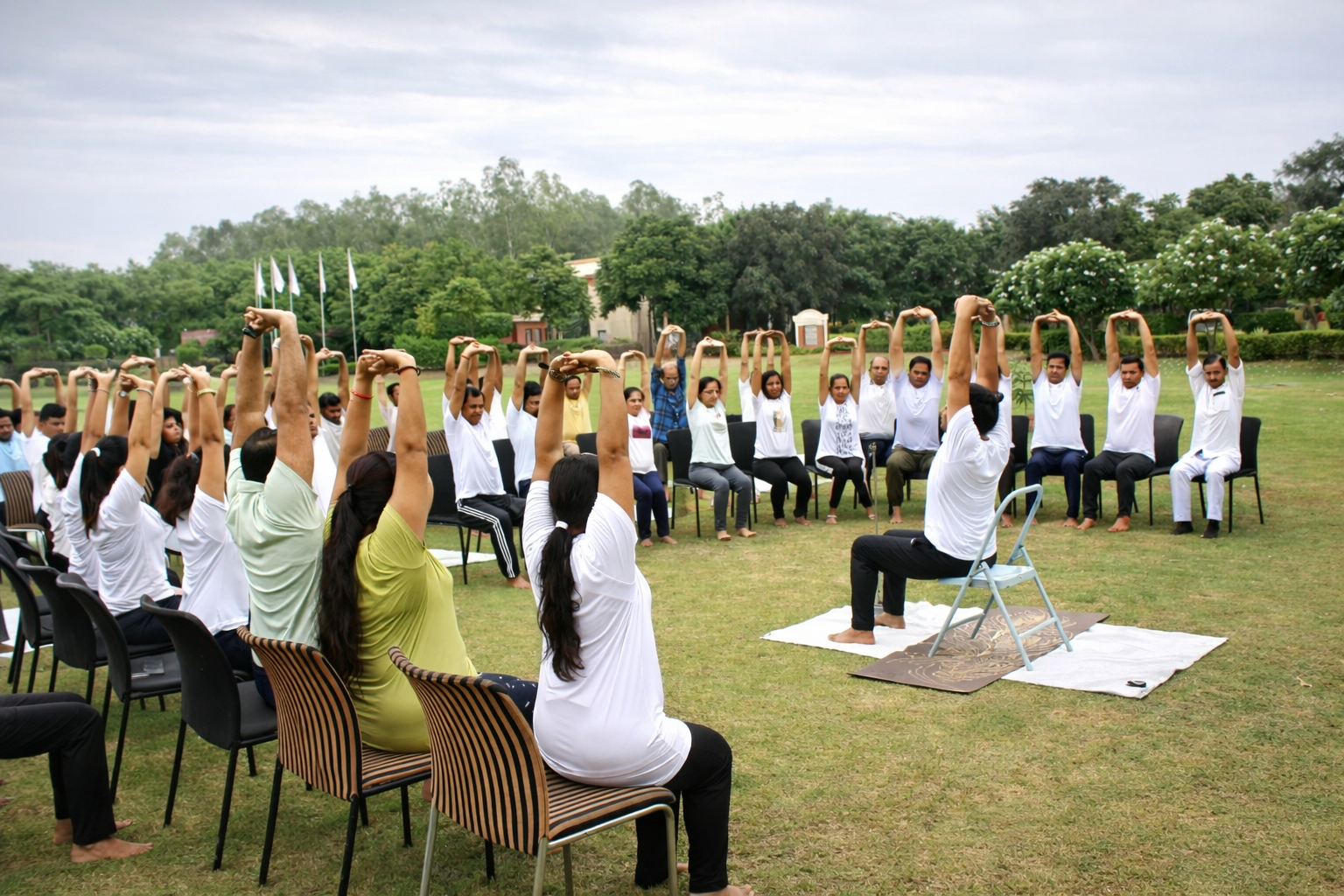
Postures, alignment, and the contact with props increase body awareness, improving sensitivity and connection with the present moment.
In yoga philosophy, controlling the senses (pratyāhāra) is considered a step toward deeper meditation. When the senses are balanced and calm:
• The mind becomes still and focused
• Stress and anxiety are reduced
• Awareness deepens, bringing clarity and peace
• The body feels more alive, balanced, and connected
At YogAbhyasa, we integrate posture, alignment, props, breathwork, and mindfulness to bring harmony to the senses, so they no longer scatter your energy but instead guide you toward inner balance and health.